
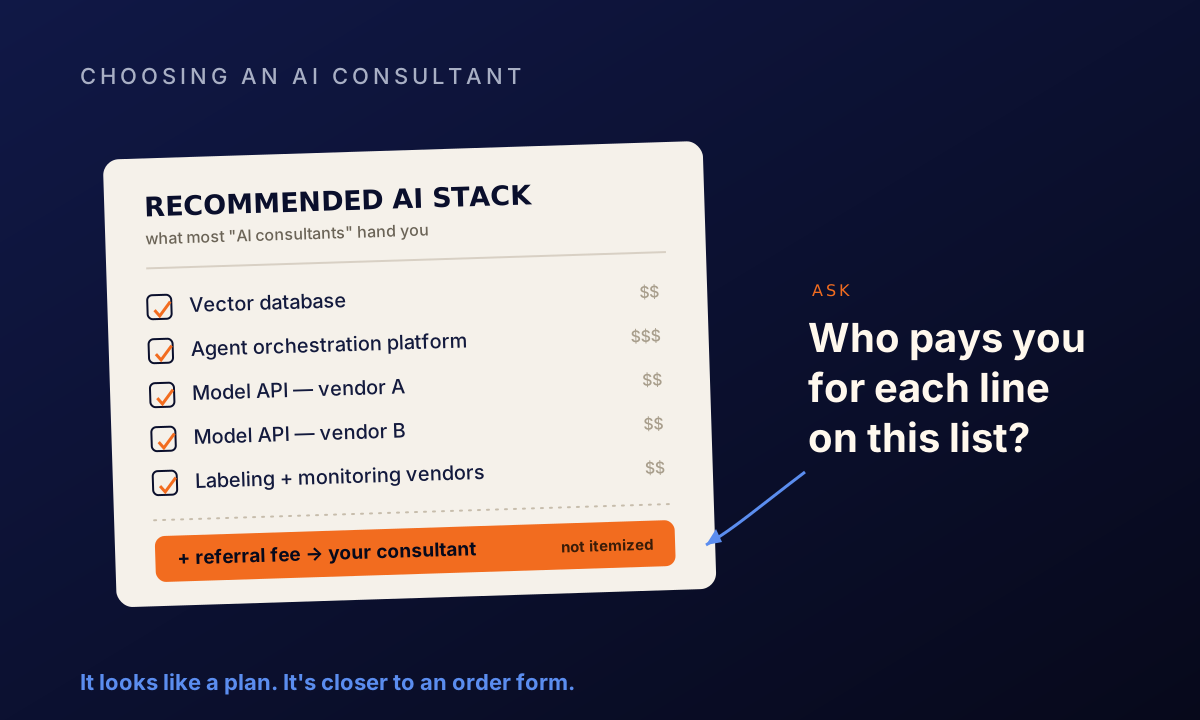
An AI consultant ends a discovery call by sharing one slide. It lists fifteen tools — a vector database, an orchestration platform, two model APIs, a labeling service, a monitoring vendor — each with a logo and a checkmark and a line on a timeline. It looks like a plan. It is closer to an order form. Nobody asked which decision each tool answers, what you would test before trusting it, or who on your team runs the thing after it is wired together and the consultant moves on.
The uncomfortable part is that the shopping list often has less to do with your problem than with how the consultant gets paid. That is not a reason to distrust every recommendation. It is a reason to know how the person making it earns a living before you act on it.
Why the shopping list happens
Recommending software can pay a consultant in several ways, and most of them are invisible to the client:
- Reseller margins. Many firms resell the software they recommend and keep a cut. Forrester has a name for the tension this creates — the “VAR’s dilemma”: whether to design the solution that is cheapest for the customer or the one that is most lucrative for the firm.
- Referral and finder’s fees. Vendors pay a percentage of any deal a consultant sends them. In software these commonly run from 5% to as much as 50% of the deal, and some partner programs pay roughly 20% of revenue recurring for the lifetime of the customer — which gives the consultant an ongoing stake in keeping you on that vendor.
- Sales incentives paid to individuals. Vendors fund cash bonuses, sometimes paid directly to a partner firm’s individual salespeople, for pushing a specific product during a promotion window. The person recommending the tool can be personally paid to recommend that tool.
- Partner status and implementation work. Being a certified partner of a cloud or AI platform comes with co-sell incentives and, more importantly, large implementation contracts. Implementation work dwarfs advisory fees, so there is a steady pull to steer you toward the stack the firm is paid to install.
None of these arrangements is illegal, and plenty of capable firms use them. The problem is narrower and more practical: they quietly tilt the advice, and you almost never see the tilt. A recommendation that happens to pay the recommender is the hardest kind to evaluate, because it arrives wearing the same confidence as a disinterested one.
The law mostly leaves you on your own
You might assume disclosure is required. In most of the professions where someone advises you on what to buy, it is. AI consulting is the exception.
| Who advises you | Required to disclose a financial conflict? |
|---|---|
| Financial adviser | Yes — fiduciary duty and SEC disclosure |
| Real-estate agent | Yes — RESPA bars undisclosed referral fees |
| Doctor | Yes — federal Anti-Kickback Statute and Stark Law |
| AI / IT consultant | Generally no requirement |
Ordinary business AI and IT consulting sits in a regulatory gap. There is usually no statute forcing a consultant to tell you they resell a tool or collect a referral fee on what they recommend.
Two narrow exceptions exist, worth knowing but neither covering the ordinary case. The FTC’s endorsement rules require that any public endorsement carrying a paid relationship — an affiliate link, a sponsored “recommended tools” page — disclose it clearly. And a payment kept secret from someone acting as your formal agent, intended to influence the advice they give on your behalf, can cross into commercial bribery or a breach of fiduciary duty. Both are real, and both are narrow.
The case that matters most is the ordinary one, and there the law is silent. A referral fee a consultant collects on the tools they recommend, and simply never mentions, is in most engagements perfectly legal. That is the actual exposure — not fraud you could sue over, but a legal, undisclosed incentive quietly shaping the advice. Nobody is required to tell you, most never will, and you do not find out, so you never get to weigh it.
So the safeguard has to come from you, not the statute book: choose an independent advisor, and ask. (This is general information, not legal advice — check with counsel on your specific situation.)
What “strategic” actually means
Strategy is the part the shopping list skips. A strategic advisor works in the opposite order from a tool list: they start with the decision you are trying to make and the constraints you actually have, and only then ask what, if anything, to build or buy.
In practice that shows up as a few habits. Recommendations are tied to evaluation evidence and a business case, not to a logo. The advisor is willing to give you the unprofitable answer — buy the off-the-shelf option, do not build this, wait until the data is ready, do nothing yet — because being right matters more to their reputation than the size of the engagement. And the work is built to be handed off, so your team can run it after the advisor leaves rather than depending on them to keep the lights on. A recommendation that only ever points toward more building, more buying, or more of the consultant is a signal worth pausing on.
The questions that expose the difference
You do not need to audit a firm’s books. A handful of direct questions, asked early, tell you most of what you need — and a good advisor answers them without flinching:
- Do you resell, or earn referral or partner fees from, any of the tools you would recommend to us?
- Are you a certified or paid partner of a platform you would put us on?
- How do you decide build vs. buy — and when was the last time you told a client to do nothing yet?
- What do you evaluate before recommending anything, and can we see that evaluation?
- After you hand off, who on our team can operate what you built?
- Will you put your vendor relationships, or the absence of them, in writing?
Watch the last one especially. An independent advisor will commit it to writing without a second thought, because their answer is “none.” Anyone who hesitates is telling you something.
Where we stand
We built ideius to sit on the independent side of that table, and the honest version of that is more useful than the marketing one.
Here is what we genuinely do not do: we do not resell tools, and we take no referral, partner, or kickback fees from any vendor we discuss. No vendor pays us, so nothing a vendor pays can tilt what we recommend — including the times the honest answer is to buy off-the-shelf, or to not build at all.
And here is the one incentive we would rather name than hide: we also build. If a strategic engagement concludes that a custom build is the right call, you might decide to hire us to build it, and we would benefit from the path you chose. We keep that honest in concrete ways — the strategic work is fixed-scope and stands on its own, the plan is yours to take to any builder, and we recommend buying instead of building, and waiting, often enough that you can check our advice against our incentives. Apply to us the same test you would apply to anyone: ask, and get it in writing. That is evidence over enthusiasm turned on our own incentives.
If you are weighing an AI decision and want a read with no vendor on the other side of it, that is where our AI strategy and roadmap work and the AI Decision Memo start — and for an outside check on a tool or vendor you are already considering, AI technical due diligence.